
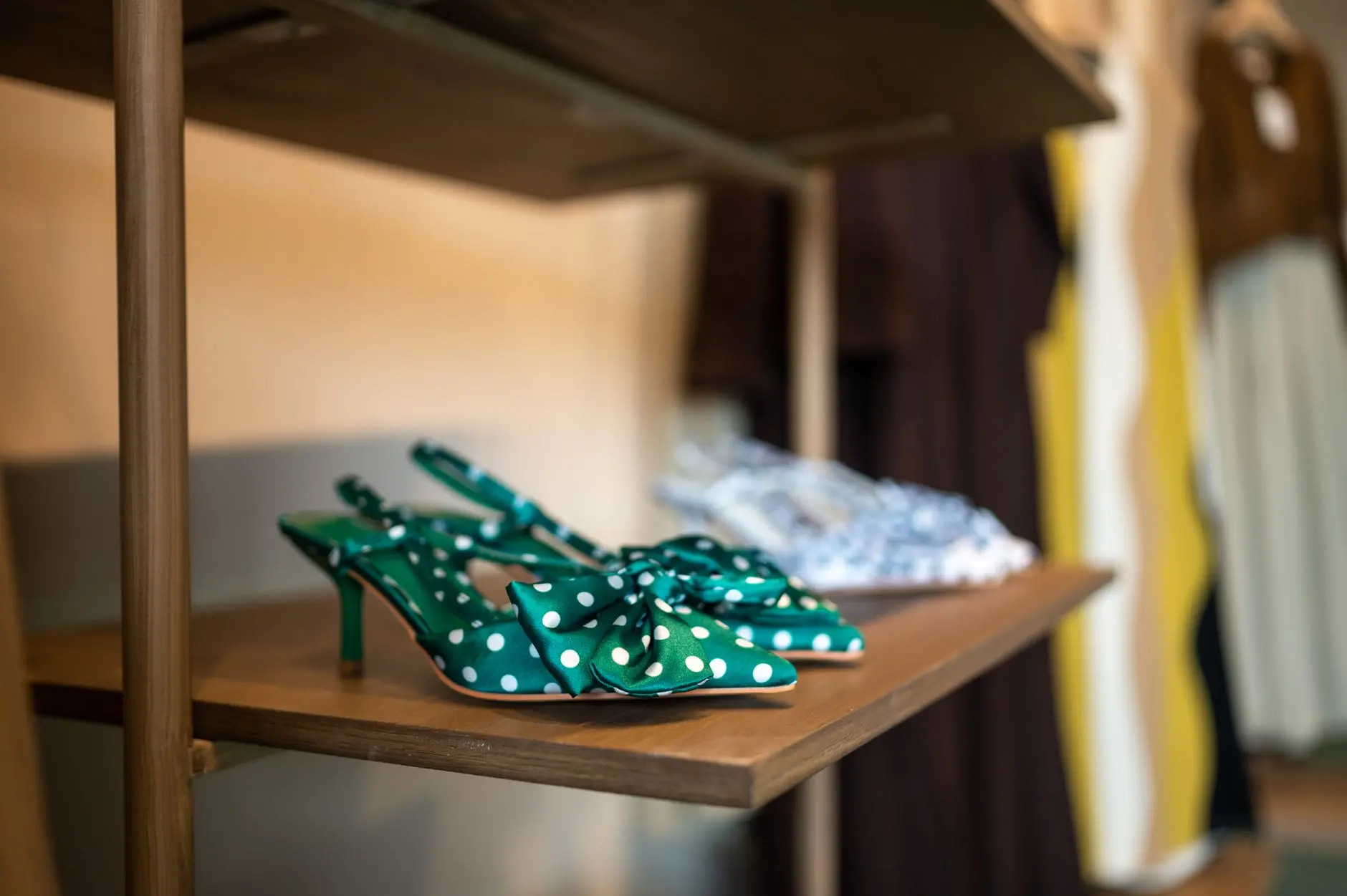
A heel can be described in two ways, which complement rather than replace one another: its height, from flat to very high, and its shape, from the thin stiletto to the solid wedge. Stiletto, spool, kitten, wedge or Cuban: these names describe precise shapes, each with its own silhouette, use and sometimes its own history. Behind these names lie very concrete choices: the contact surface with the ground, stability on different kinds of surface, and how easy it is to walk for a long time without fatigue. Knowing them helps when reading a shoe’s product description, where the shape of the heel is often named but rarely explained. Here is how to recognise them and choose the shape suited to the occasion and the comfort you are after.
Types of heels at a glance
| Type of heel | Shape | Typical height | Comfort note |
|---|---|---|---|
| Stiletto | Thin from top to bottom, close to a narrow circle in section | High to very high | Weight concentrated on a small surface |
| Spool | Narrower in the middle, flared at top and bottom | Medium to high | Weight distributed better than a stiletto |
| Kitten | Thin, but short | Low | The most approachable of the thin heels |
| Wedge | A solid block under the whole sole, from heel to forefoot | Low to high | Wide base, good stability |
| Cuban | Straight, square in section, slightly angled forward | Medium | More stable than a stiletto, narrower than a block |
This table ranks the five most common shapes. Others exist too, such as the block heel, the platform heel or the comma heel, covered further down.
Height or shape: two ways to classify heels
Heels are first ranked by height: flat (under 2 centimetres), low, kitten (generally under 5 centimetres), medium (around 5 to 7 centimetres), high and very high (above 9 or 10 centimetres, depending on the benchmarks used by manufacturers). This first reading describes the distance between the ground and the heel of the foot, without saying anything about the shape of the heel itself.
The second reading, the one this guide focuses on, concerns the shape: how wide the heel is at the top, in the middle and at the bottom, and how it is angled. A stiletto heel and a block heel can, at the same height, offer very different comfort and look, because their shape changes the contact surface with the ground and how body weight is distributed.
These two readings always combine: the same shape name, stiletto or Cuban for example, exists in a low version as well as a high one. That is why two pairs described by the same type of heel can feel very different to wear depending on the height actually chosen for that model.
The stiletto heel, the thinnest and highest
The stiletto heel is thin from top to bottom, close to a small circle in section, and most often reaches considerable heights. This modern shape is linked to the French shoemaker Roger Vivier, who created it in 1954 for the house of Dior under the name « aiguille »: inserting a thin metal rod into the heel made it possible to achieve a shape that was both high and thin, without the heel breaking under body weight. Very thin heels existed before this date, but it was this reinforced version that popularised the shape in mid-twentieth-century fashion.
Because of its thinness, the stiletto heel concentrates all the weight on a small surface, which makes it a shape associated with occasions where walking is limited: an evening out, an event, a short trip. The height of a stiletto varies widely from one model to another, from 7 or 8 centimetres to over 12 centimetres on some runway pieces, making it one of the shapes with the widest range of available heights. A pump with a stiletto heel remains a classic evening shoe; our comparison of women’s designer shoes presents several addresses for this type of model, alongside flatter shapes such as the ballet flat or the loafer.
The spool heel, narrower in the middle
The spool heel is recognisable by its double-flared shape: wider at the top, near the shoe, wider too at the bottom, near the ground, and narrower in the middle, similar to a spool of thread. This silhouette distributes weight slightly differently from a stiletto, with a wider base on the ground at the same height.
The spool heel has gone through several waves of popularity in Europe, notably in the 17th and 18th centuries, then again in the 1860s and in the 1950s, following periods when fashion returned to sculpted heel shapes rather than strictly straight or thin ones. A low spool heel keeps a discreet flare at the base, while a higher version looks closer to a stiletto, with this extra flare added towards the bottom.
This shape is found today on boots and ankle boots as well as on pumps, often presented as a more sculptural alternative to the straight stiletto, with a somewhat different balance on the ground due to its double flare.
The kitten heel, the lowest of the high heels
The kitten heel is a thin heel, close in shape to the stiletto, but noticeably shorter: generally under 5 centimetres. It appeared in the late 1950s as a starter heel designed for young teenagers, at a time when a higher heel was considered unsuitable for that age group. It later spread to a wider audience in the years that followed, worn by older teenagers as well as adult women.
Thanks to its low height, the kitten heel remains one of the simplest thin heels to wear on a daily basis, including for someone not used to heels. It appears on pumps as much as on sandals or ankle boots, often presented as a more approachable alternative to the classic stiletto heel.
After a decline in popularity in the late 1960s, driven by the rise of the stiletto among adult women, the kitten heel has made a comeback several times since, notably in the 1980s and again from the 2000s onward, each comeback bringing a new generation of models on pumps or sandals.
The wedge heel, a single block of a sole
The wedge heel stands apart from other shapes in its construction: instead of a separate heel attached to the sole, it forms a solid block running from the heel to the front of the foot, creating a continuous slope under the whole shoe. This shape is linked to the Italian shoemaker Salvatore Ferragamo, who developed a cork wedge heel in the 1930s, against a backdrop of metal shortages in Italy that made traditional heel-making more difficult.
Thanks to its wide base, the wedge heel generally offers better stability than a stiletto or a Cuban heel at a comparable height, which makes it a shape often recommended for a long day of walking or outdoor use, on ground less even than an indoor surface.
The original material, cork, is still present on some current wedge models, either on its own or combined with other materials (braided rope, wood or lighter foam), making it possible to get a block that is both wide and relatively light compared with a solid wooden heel.
The Cuban heel, wide and straight
The Cuban heel is a straight heel, square in section, slightly angled forward, wider and more stable than a stiletto. The shape itself is ancient: shoes with heels already equipped riders centuries before our own era, with the heel used to keep the foot in the stirrup, and heels of a comparable shape are also recorded in European menswear as early as the 17th century. The exact origin of the English name Cuban heel remains debated: the sources do not establish it with certainty.
It was in the 20th century that the Cuban heel took on the form best known today, and it owes much of its recent popularity to the Cuban-heeled boots worn by the Beatles in the 1960s, which linked this shape to the menswear and unisex fashion of the time. It is found today on ankle boots, boots and certain dance shoes, where its stability is sought after.
In ballroom dancing, the Cuban heel remains a technical reference: its straight section and moderate height offer support considered safer for figures than a stiletto, which explains its regular presence on dance shoes meant for practice rather than for the stage alone.
Other heel shapes worth knowing
Other shapes complete this overview, less tied to a specific name or date, but common on current models. Several of them borrow traits from the five shapes described above, combining a narrow base with a wider one, or a straight profile with a curved one, rather than introducing an entirely new construction:
- Block or square heel: wide from top to bottom, without any flare or particular thinness, it favours stability over the elegance of a thin heel.
- Platform heel: a thick sole added under the front of the foot, in addition to the heel, which reduces the height actually felt compared with the real height of the heel.
- Comma heel: a sinuous shape, curved inward then outward, linked to Roger Vivier’s later creations for his own house.
- Sculpted heel: a crafted shape, sometimes asymmetrical or openwork, conceived as a decorative element in its own right rather than as a simple support, and often reserved for collector’s pieces rather than everyday wear.
- Conical heel: a base wider than a stiletto’s but which tapers progressively towards the ground, in between the stiletto and the block heel both in look and in stability.
These shapes often combine with the five described above: a platform heel, for instance, can be built on a stiletto, spool or block base.
Caring for heels according to their material
Caring for a heel depends mainly on the material covering it, more than on its shape:
- a leather-covered heel is cleaned dry with a soft cloth, and can be polished like the rest of the shoe to slow down wear on the covering;
- a patent or lacquered heel is wiped with a slightly damp cloth, without an abrasive product that would scratch the glossy surface;
- a cork heel, typical of the wedge, is sensitive to prolonged moisture: exposing it to rain damages it faster than a heel in wood or hard plastic;
- whatever the material, a worn heel tip, visible on a stiletto or a thin Cuban heel, should be replaced by a cobbler rather than letting the internal metal touch the ground directly, which would wear the heel down irreversibly.
A regular visit to a cobbler, to check the condition of the tip and the covering, extends the lifespan of most of the heel types covered here, whatever their height. Storing pairs flat or standing in a box, rather than stacked on top of one another, also avoids bending or scratching a thin heel such as the stiletto or the spool during storage.
How to choose a heel by occasion and comfort
The choice of a type of heel first depends on the intended use. For everyday wear with a lot of walking, a kitten heel or a small block heel limits fatigue while keeping a visible heel, a useful middle ground between a flat shoe and a higher, thinner heel; for days when a heel is not needed at all, our comparison of trendy women’s sneakers and our guide on where to buy Autry sneakers present flat alternatives suited to extended walking.
For an occasion where stability matters most, such as an outdoor outing or a day spent standing, a wedge heel or a block heel offers a wider base than a stiletto or a thin Cuban heel. For an evening out or an event where walking remains limited, a stiletto, a comma heel or a sculpted heel remain the shapes most associated with dressy outfits.
The type of ground expected also plays a part in the choice: old cobblestones, gravel or a lawn put a thin heel to the test, sinking into it or getting caught more easily than a wide heel or a wedge, whose continuous base spreads the weight over a larger surface. By contrast, a flat, even surface, such as a reception hall floor, suits every type of heel covered here.
How often the heel will be worn matters too. A heel meant for occasional use, worn for a few hours, can tolerate a less stable shape than a heel intended for near-daily use, where comfort and resistance to wear matter more than the look sought for a single occasion.
Finally, foot shape also comes into play: a sensitive forefoot or a wide foot generally copes better with a wide heel, which spreads pressure over a larger surface, than with a stiletto, which concentrates the full weight of the body on a narrow point. A Cuban heel or a spool heel, intermediate in shape, often suit someone looking for a compromise between the look of a thin heel and the stability of a wide one. Trying on several shapes, at a comparable height, remains the surest and simplest way to find the one that best suits your own foot and your own walking habits.