
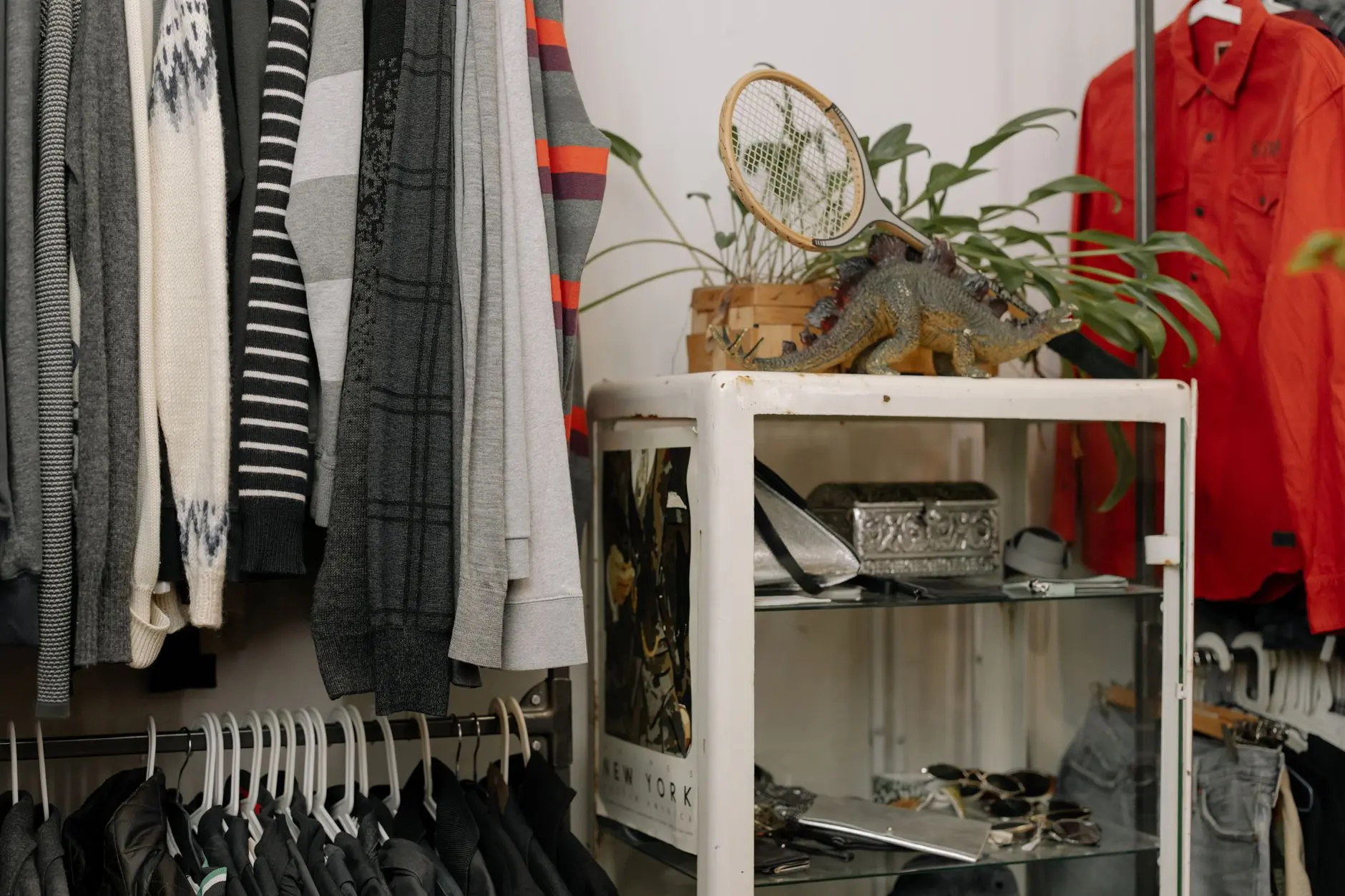
Finding a designer piece secondhand starts with choosing a channel, and knowing what it does and does not guarantee. Between a listing posted by an individual and a piece handed to a specialised platform, the level of control over authenticity and the protections available to the buyer change completely. Here is how to navigate it, piece by piece, without a bad surprise at checkout.
Channels for buying designer pieces secondhand at a glance
| Channel | What it guarantees | Best suited for |
|---|---|---|
| Peer-to-peer classified ads | Direct contact between buyer and seller, no centralised check on items | Everyday pieces, tighter budgets, buyers comfortable checking items themselves |
| Specialised luxury consignment and resale platforms | Authentication most often done before listing, commission charged | Higher-value pieces, designer bags and jewellery, when a third-party check matters |
| Physical thrift and vintage shops | The piece is seen and tried on before buying | Everyday clothing, judged by eye and by touch |
| Private sales run by the houses themselves | Pieces sourced directly from the brand’s own collection | End-of-season stock or returns, where the house offers this service |
Peer-to-peer classified ad platforms
General classified ad platforms connect an individual seller with a buyer, with no intermediary on the item itself: no systematic authentication, no condition check before shipping. The buyer relies on the photos, the description, and whatever questions they ask the seller directly before buying.
This lack of an intermediary has a direct legal consequence: between individuals, the 14-day right of withdrawal and the legal conformity guarantee, which protect a purchase from a professional, do not apply (checked 30 October 2026, INC-conso; Que Choisir). The platform limits itself to a matchmaking role, even when it collects the payment and forwards it to the seller afterwards. A claim is still possible if the seller misrepresented the condition or origin of the item, but it then falls under general sale rules rather than the protections tied to buying from a professional.
Before ordering through this kind of channel, checking the seller’s status, individual or declared professional, changes the buyer’s rights: some platforms mix both types of sellers in the same catalogue, without always flagging it clearly on the product page.
The platform’s built-in messaging keeps a written record of exchanges with the seller, useful if a dispute arises over the item’s condition on arrival. Moving to a payment channel outside the platform at the seller’s request, to avoid the platform’s commission, strips the buyer of that paper trail and of whatever mediation the service might otherwise offer.
Specialised consignment and resale platforms
At the other end, consignment shops and platforms specialised in luxury and designer fashion physically receive the piece before listing it. They examine it, most often authenticate it using a dedicated team or a verification tool, then publish it with their own photos and a standardised description. In exchange for this service, they charge a commission on the sale price, paid by the seller, the buyer, or split between the two depending on the platform.
This upfront check reduces the risk of counterfeits compared with a peer-to-peer listing, without removing it entirely: no authentication method is public or infallible, and the quality of the check varies from one service to another. Still, having a verification step before the buyer even sees the piece structurally sets this channel apart from a direct listing.
Physical thrift shops specialised in designer fashion offer a third option, somewhere in between: the piece can be seen and tried on before buying, which limits the risk of a bad surprise on fit or fabric, even when authentication is less formalised than online. For a piece of designer ready-to-wear, this direct contact with the garment helps judge a build quality that photos do not always show.
How to check a piece’s authenticity before buying
Whether it is a bag, a garment or a piece of jewellery, authenticity is judged on a combination of clues, never on a single element taken on its own.
- The serial number or date code, when the house uses one: its location and format vary by model and manufacturing year, and its presence alone proves nothing, since counterfeits sometimes reproduce existing numbers.
- The quality of the stitching and finishing: even, regular stitches with no loose thread, and a clean alignment of the pattern or monogram across seams and pockets, are signs of careful manufacturing.
- The material and the hardware: the weight of the leather, the texture of a fabric, and the finish and sturdiness of clasps or buttons should match what the house states for that model.
- The original accessories: a dust bag, authenticity card, tag and invoice strengthen the case without being sufficient on their own, since a card can also be imitated.
- The item’s history: an invoice, a bill of sale, or failing that a written exchange with the seller about the item’s origin, gives the buyer recourse if a dispute comes up later.
- The smell and overall wear: an artificial new-item scent masking a warehouse smell, or wear that does not match the photos (unmentioned loose stitching, localised discolouration), are signals worth noting before confirming the purchase.
For a higher-value piece, a third-party authentication service specialised in the house or the product category remains the most reliable check: it cross-references several of these clues against a reference base that a buyer alone does not have. The same material and construction markers apply to new pieces too: our guide to cashmere explains how to recognise a good fibre by hand, a habit that is just as useful on a secondhand knit.
Pitfalls to know before paying
Beyond authenticity, a few other points are worth checking before confirming a secondhand order.
The seller’s status changes the buyer’s rights, as noted above: an individual seller means no right of withdrawal and no legal guarantee; a professional seller means both apply. A single site can host both types of sellers.
The size listed sometimes reflects an older labelling convention or a cut specific to a given collection, especially on a piece that has been on sale for several seasons. Asking for flat measurements, rather than relying on the listed size alone, avoids a disappointment on arrival.
Extra costs (the platform’s commission charged to the buyer, shipping, return fees when returns are accepted) sometimes add to the listed price and noticeably change the final amount: comparing them before confirming the purchase is the only way to plan for them.
The return policy, where one exists, varies a great deal between secondhand services, unlike a new purchase on a house’s official site, where the return policy is usually clearly displayed. Our comparison of women’s designer clothing online details the delivery and return terms on several official sites, useful as a point of reference for comparison.
The photos and description are the only information available before an online purchase: photos taken only in a studio setting or heavily edited, with no close-up of the finishing or any wear, are worth questioning directly with the seller rather than trusting blindly. A serious seller, whether an individual or a professional, answers a specific question about an item’s condition in detail.
Secondhand and smaller designers, another way to consume fashion
Buying a piece that has already been worn, rather than a new one, simply extends the life of a garment, bag or piece of jewellery that has already been made, without any additional production. That argument comes up often to explain the growth of these channels, alongside the more accessible price on a designer piece that would otherwise stay out of reach new.
This movement also benefits younger designers and smaller labels, whose past-season pieces keep circulating on these platforms long after they leave the shop floor, sometimes sought out precisely because they are no longer in production. For anyone looking for a specific piece from an older collection rather than a new release, secondhand channels are often the only option available, where a house’s official site only carries its current collection.
Selling your own designer pieces
The same choice of channel comes up in reverse, for anyone looking to part with a piece. A direct peer-to-peer listing avoids a specialised platform’s commission, but means handling the photos, buyer exchanges and shipping alone. Using a specialised consignment service simplifies these steps and reassures the buyer through authentication, in exchange for a commission taken on the sale price.
Either way, a few habits make a piece easier to sell: clear photos taken in daylight, from several angles and including any flaws, an accurate description of the condition and real measurements, and a price in line with recent comparable sales rather than the original purchase price. Keeping the invoice or any document proving the item’s origin also helps reassure a buyer who cares about authenticity.
What to remember
- Two main types of channels: peer-to-peer classified ads, with no centralised check, and specialised consignment platforms, which most often authenticate a piece before selling it.
- Between individuals, there is neither a right of withdrawal nor a legal conformity guarantee; these protections only apply with a professional seller.
- Authenticity is judged on a combination of clues (serial number, stitching, hardware, original accessories), never on a single element.
- Check the real size, any extra costs, and the return policy before confirming a secondhand order.
- To sell, clear photos, an accurate description of flaws, and a price in line with the market make the transaction easier, whichever channel is chosen.