
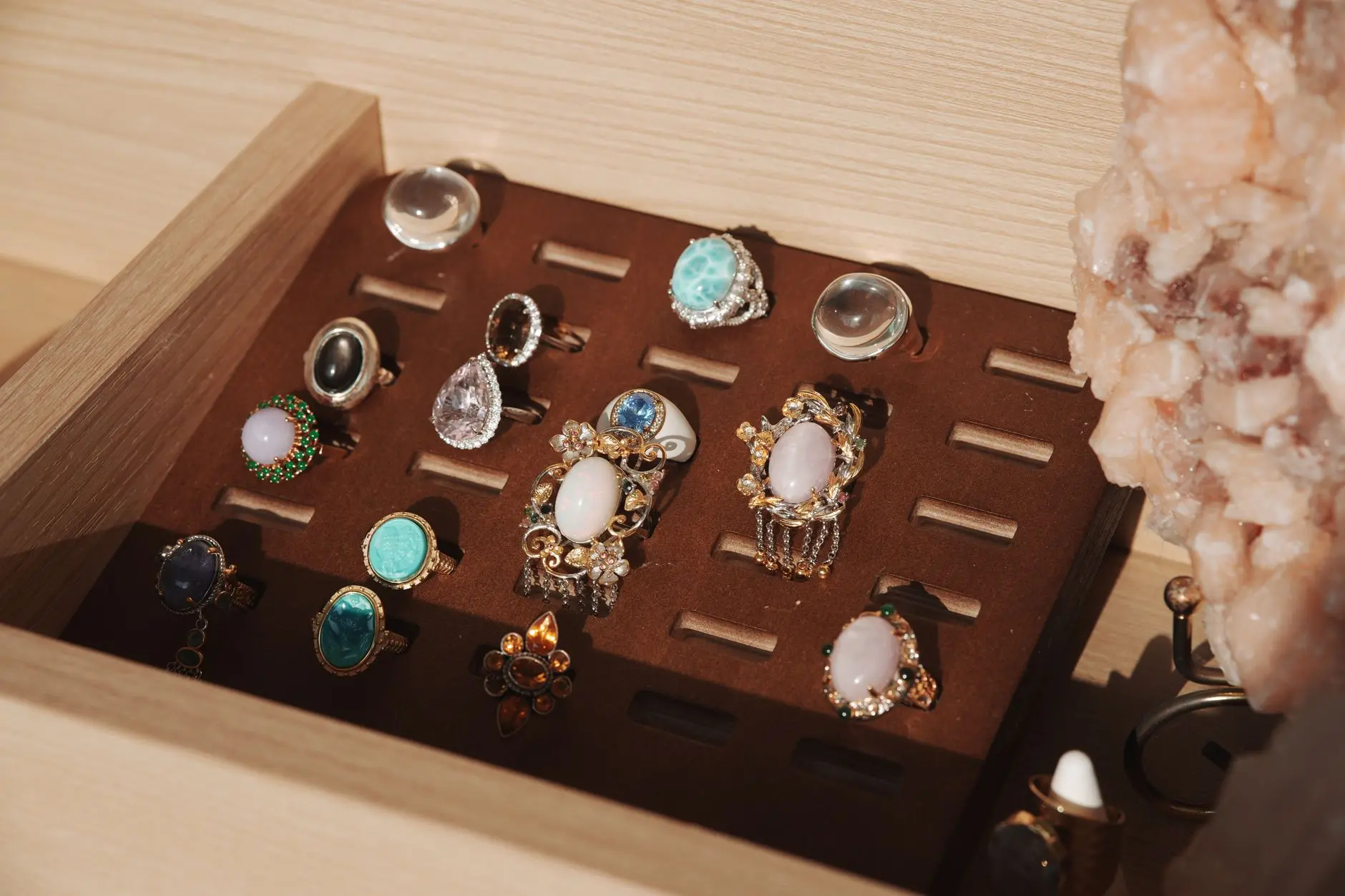
November does not have one birthstone but two: topaz and citrine, both in warm tones running from pale yellow to deep orange. The modern birthstone list, set in the United States in 1912 and revised in 1952, keeps both, without favouring either one, which leaves anyone born that month free to pick whichever stone suits their taste or budget. Here is where each name comes from, what sets the two stones apart, and what to know before choosing one as jewelry.
Topaz and citrine at a glance
| Topaz | Citrine | |
|---|---|---|
| Mineral family | Aluminium fluorosilicate | Quartz (silica) |
| Common colours | Colourless, blue (usually treated), orange to pink (imperial topaz) | Pale to golden yellow, sometimes orange-brown |
| Hardness (Mohs scale) | 8 | 7 |
| Origin of the name | Disputed: the island of Topazios in the Red Sea, or the Sanskrit root tapas, fire | Latin citrus, via the French citrin, referring to the colour of a lemon |
| Availability | Blue topaz very common, natural imperial topaz rarer | Natural citrine is rare; most stones sold are heat-treated amethyst or smoky quartz |
Citrine, November’s golden quartz
Citrine is a variety of quartz, the same mineral as amethyst or rock crystal, coloured yellow to golden by traces of iron. Its name likely comes from the Latin citrus, via the French citrin, referring to its colour close to that of a lemon. It is traditionally associated with joy, abundance and positive energy, a symbolism that probably owes as much to its sunny colour as to its history.
One point is worth knowing before buying a citrine: the natural stone is rare. The vast majority of citrines sold commercially are actually amethyst or smoky quartz heated above 200 to 300 degrees Celsius, a treatment that turns their colour golden yellow. This treatment is permanent, widely accepted in the trade and should be disclosed by a reputable jeweller. A natural citrine is usually recognisable by a fairly even pale yellow tone, while heated amethyst tends to show a lighter or milky base, with colour concentrated near the tip of the original crystal.
At 7 on the Mohs scale, citrine holds up well to everyday wear, as long as direct knocks and harsh chemicals are avoided.
Topaz, November’s historic stone
The origin of the name topaz is disputed. The most commonly cited version traces it to Topazios, the ancient Greek name for an island in the Red Sea now called Zabargad, where the Ancients believed the stone was mined, even though the mineral actually found there was probably not topaz in the modern sense. Another hypothesis links it to the Sanskrit root tapas, fire. Both accounts coexist in etymological sources, without a definitive answer.
In its pure form, topaz is colourless. It is the presence of trace elements, or treatment by heating and irradiation, that produces the wide range of colours found in jewelry: blue, the most common in stores, but also yellow, pink or the distinctive orange of imperial topaz, the most sought-after variety. Natural blue topaz does exist, notably in Brazil, but it remains rare: almost all the blue topaz sold commercially is colourless topaz that has been treated, a common and disclosed practice among professionals.
At 8 on the Mohs scale, topaz ranks among the most scratch-resistant fine gemstones, just behind corundum (ruby and sapphire) and diamond. It does, however, have a clear cleavage plane, a structural weak point that can cause it to split under a well-placed knock, even though it withstands everyday wear well.
Topaz or citrine: which to choose for jewelry worn every day
For a ring worn every day, hardness is the first thing to look at. Topaz, at 8, holds up better than citrine, at 7, against repeated friction from surfaces, fabric and other jewelry. The gap remains moderate, though: citrine suits everyday wear very well, as long as it is not knocked directly and is removed for sport, gardening or washing up, like any fine gemstone.
For earrings or a pendant, less exposed to knocks than a ring, both stones wear equally well, and the choice comes down mainly to colour and budget: citrine, an abundant quartz gem, is generally more affordable than topaz, especially compared with a natural imperial topaz.
As for the setting, both stones pair as well with yellow gold, which echoes their warm tone, as with silver or white gold, which heighten the contrast. A faceted cut, which plays with light, tends to suit citrine particularly well, while a cleaner cut can let a fine imperial topaz speak for itself. For help choosing between these metals, our gold-plated, vermeil or solid gold guide explains what each term actually means, and our comparison of gold jewelry for women gathers several addresses for finding a setting worthy of the stone.
Caring for a topaz or citrine piece
Both stones are easy to clean, provided a few pitfalls are avoided:
- clean with lukewarm soapy water, using a soft brush, then dry with a lint-free cloth;
- avoid ultrasonic cleaners for topaz, whose cleavage plane can widen under vibration;
- avoid sudden temperature changes (very hot water right after a cold stone), which weaken topaz along its cleavage;
- put the piece on last, after perfume, cream and hairspray, to limit deposits on the stone;
- remove rings and bracelets for sport, gardening or washing up, more as a precaution than a necessity, since both citrine and topaz hold up well to everyday handling;
- store each piece separately, in a pouch or a lined compartment, since harder stones such as topaz can scratch softer jewelry stored alongside them.
A birthstone piece is as much something to pass down as to wear: a ring given to mark the birth of a child born in November, a pendant bringing together the stone of each member of a family. For more gifting ideas, our guide to Christmas gift ideas for women gathers addresses from independent designers.
Birthstone or zodiac stone: the case of November
November is a good illustration of why birthstones and zodiac stones should not be confused. The birthstone follows the calendar month: topaz or citrine for anyone born between 1 and 30 November. Zodiac stones, on the other hand, follow astrological signs, which do not line up with calendar months: Scorpio runs from late October to around 21 November, after which Sagittarius takes over until the end of the month. Someone born on 10 November is therefore a Scorpio but has topaz or citrine as their birthstone, while someone born on 28 November is a Sagittarius with the very same birthstone.
The lists of stones linked to each sign also vary considerably from one tradition to another, since they were never standardised the way the birthstone list was in 1912. For a complete calendar, month by month, with the history behind the tradition and all twelve stones that make it up, our birthstone guide covers the whole calendar and its successive revisions.
Whether you choose topaz for its resilience or citrine for its sunny colour and affordability, both of November’s stones share the same promise: a warm tone that is easy to wear all year round, not just as a birthday gift.